
RVA Pro Painters primarily focuses on Epoxy Floor Coating as their main garage floor solution for the Richmond, VA area, but they also acknowledge and sometimes use the higher-performance coatings like Polyaspartic and Polyurea often used in conjunction with epoxy systems.
Based on their public information and general industry standards for professional painters in the RVA region, here is a guide to the garage floor coating options RVA Pro Painters offers, with a focus on their standard process and materials.
RVA Pro Painters’ Primary Offering: Epoxy Floor Coating
RVA Pro Painters lists Epoxy Floor Coating as a core service, which is the most popular professional-grade system known for its durability and aesthetic appeal.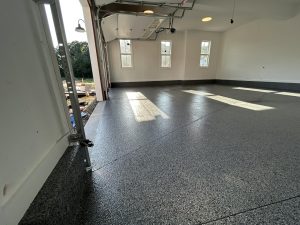
The Material & Finish
-
Type of Coating: They use a pigmented epoxy coating (a two-part resin system) to provide color and a protective base layer.1
-
Aesthetics: The system is offered with options for:
Solid colors.2
-
Decorative color flakes (creating a multi-colored, granite-like or stone-like finish).
-
A high-gloss, clear coat epoxy finish applied on top for maximum shine and protection.3
-
-
Protection: The finished floor is designed to be seamless, non-slip (especially with flake additions), and resistant to common garage issues like oil, moisture, and chemical spills.
Professional Application Process (5 Key Steps)
RVA Pro Painters emphasizes that the quality of the prep work is the most crucial part of a durable floor, which is why professionals use industrial methods, as opposed to DIY chemical etching.
-
Grinding & Preparation: The first and most critical step is grinding the concrete using heavy-duty, diamond-tipped floor grinders.4 This process:
-
Removes the old, weak, and contaminated top layer of concrete.
-
Creates a clean, porous, “roughed-up” surface profile (Concrete Surface Profile of 3–4 is typically targeted) for the epoxy to form a molecular bond.
-
-
Crack and Chip Repair: Any imperfections are cleaned, prepared, and filled with a suitable concrete patching compound to ensure a smooth, level base.5
-
Moisture Assessment: Professionals often test for high moisture vapor transmission.6 If detected, a specialized moisture-blocking primer may be applied to prevent future peeling or bubbling (delamination).7
-
Coating Application: The pigmented epoxy base coat is applied, often followed by a full broadcast of decorative flakes, and finally a clear topcoat.
-
Curing: The final protective coating must be allowed to cure completely before it can handle vehicle traffic. This process can take several days for epoxy to fully harden.
The Premium Option: Polyaspartic/Polyurea
While epoxy is their primary product, professional coating companies in the RVA area often use newer, higher-performance coatings like polyaspartic and polyurea, especially for the topcoat, to maximize durability and cure time.
| Feature | Epoxy (Base/Primer) | Polyaspartic/Polyurea (Topcoat) |
| Durability | Very good, but can be susceptible to UV and heat. | Superior. Highly resistant to UV rays (won’t yellow/fade) and better chemical/abrasion resistance. |
| Flexibility | Less flexible; can crack if the concrete shifts (common with temperature changes). | More flexible (elastomeric); less prone to cracking/peeling from concrete movement. |
| Cure Time | Long. Can take 3–7 days to fully cure and drive on. | Rapid. Can be walked on in hours and driven on in 24 hours. |
| Hot-Tire Pickup | Risk is moderate. Heat from tires can cause it to lift. | Very low risk. Its superior adhesion and heat resistance prevent lifting. |
In short: RVA Pro Painters provides high-quality, professionally installed epoxy coatings.8 For the best possible results (maximum durability and UV stability), they may recommend a hybrid system that uses a durable epoxy base coat with a Polyaspartic or Polyurea topcoat.